My first attempt at going from freelancer to agency in India failed for a reason that sounds almost silly now. I built the brand first.
There was no client base behind it yet, and no profit margin to carry it. I ended up with a brand nobody was paying for, and not even enough money coming in to maintain it.
The second time, I built my freelance profile first and let the clients and the margin grow before anything else. Only then did the brand take off. I can’t name it here because it’s confidential, but the name was never what mattered. The order was.
Short answer: Go from freelancer to agency in India when you’re regularly turning down paid work and your margin can pay someone else with profit left over. Until then, build seven systems while you’re still solo: productized services, retainers, client onboarding, SOPs, a contractor bench, your legal and tax setup, and a monthly numbers sheet. The brand comes last.
System 7 is the least exciting of the lot, and it answers the exact question I got wrong the first time.

When Should You Go From Freelancer to Agency in India?
Most people make the jump for the wrong reason. Freelancing starts to feel small, and someone else’s agency looks impressive on Instagram. Neither of those pays a contractor.
The signals worth waiting for are much less glamorous:
- You’re saying no to paid work. Month after month, because your week is already full.
- Clients come back without being chased. Repeat work and referrals mean the demand is steady.
- Your pricing can carry a second person. If someone else delivered your average project, there would still be profit left for you.
- You know what you’d hand over first. If you can’t name that task today, you aren’t ready to delegate it.
The third signal is the one I ignored. A brand starts costing money the day it exists, whether or not clients show up, and my margin wasn’t anywhere near big enough to carry it. That’s how the maintenance money ran out while the client list stayed empty.
Building the brand first is a bit like printing wedding cards before the families have agreed. Everything looks ready. Nothing is.
The rule I follow now
Build the agency only when your client base and your profit margin are both growing, and growing fast. After that, build the brand. If clients and margin aren’t already paying for it, you won’t even have the money to maintain it.
Sometimes the right answer is to stay solo. If most of your income comes from one client, you’re one email away from zero, and adding people only raises the stakes. The same goes if you love the craft but dread managing people. A well-paid solo practice is a perfectly good business, not a failed agency.
If the signals are there, don’t rush the first hire. Build the systems first, the ones that let someone else deliver work to your standard, because you can set up every one of them while you’re still working alone.
Systems 1–3: What You Sell, How You Charge, How Clients Start
These three change how the business runs before anyone else touches it. They’re also the cheapest way to scale your freelance business, because they mostly cost time.
System 1: Productized Services Instead of Custom Quotes
A custom quote for every enquiry means every project starts from scratch. That’s fine while you’re the only one delivering, and it falls apart the moment someone else has to, because nobody else knows what “a website” meant in your head.
Productized services fix that. You sell a set package with a defined scope and a fixed price, delivered the same way every time.
Say you do WordPress work. Instead of “site speed work, price on request”, you’d offer something like a WordPress Speed Fix: one site, image compression, caching configured properly, and a before-and-after PageSpeed Insights report, delivered in five working days for one fixed price. A contractor can deliver that from a checklist, and a client can say yes to it without a discovery call.
Here are the results for my own site, tested with Google’s PageSpeed Insights on 4 October 2026. I ran the mobile and desktop tests separately, so there’s one report for each. Mobile is the stricter one, because Google simulates a mid-range phone on a slow 4G connection. Before the fix, the site was scoring around 80.
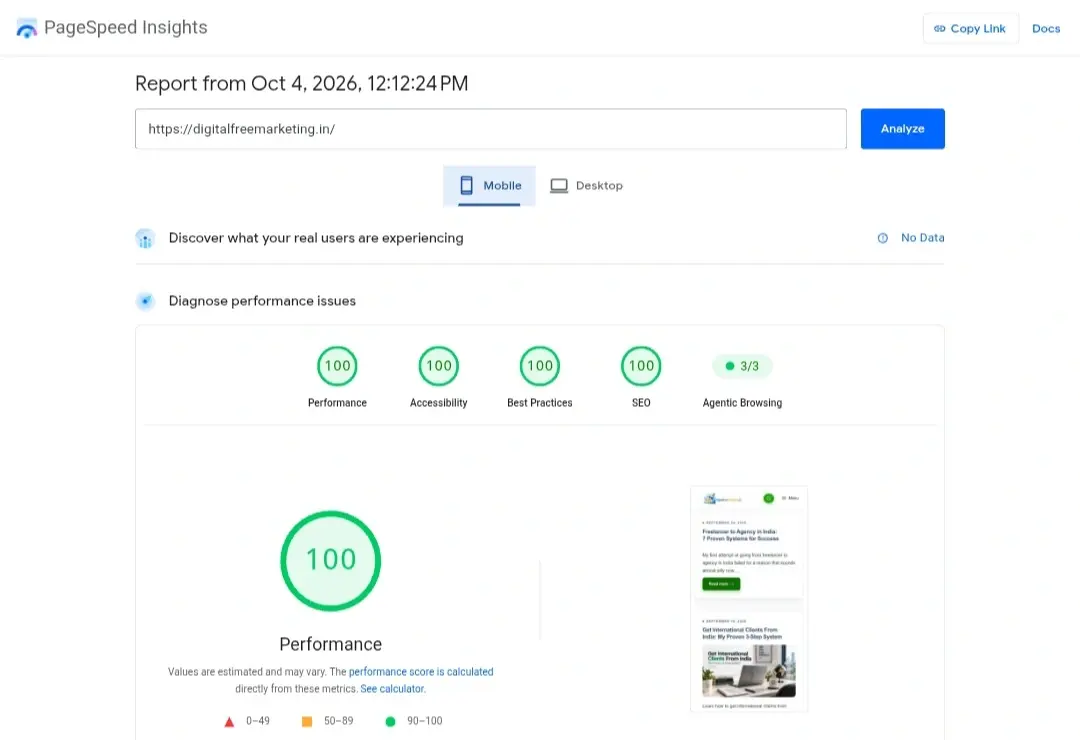
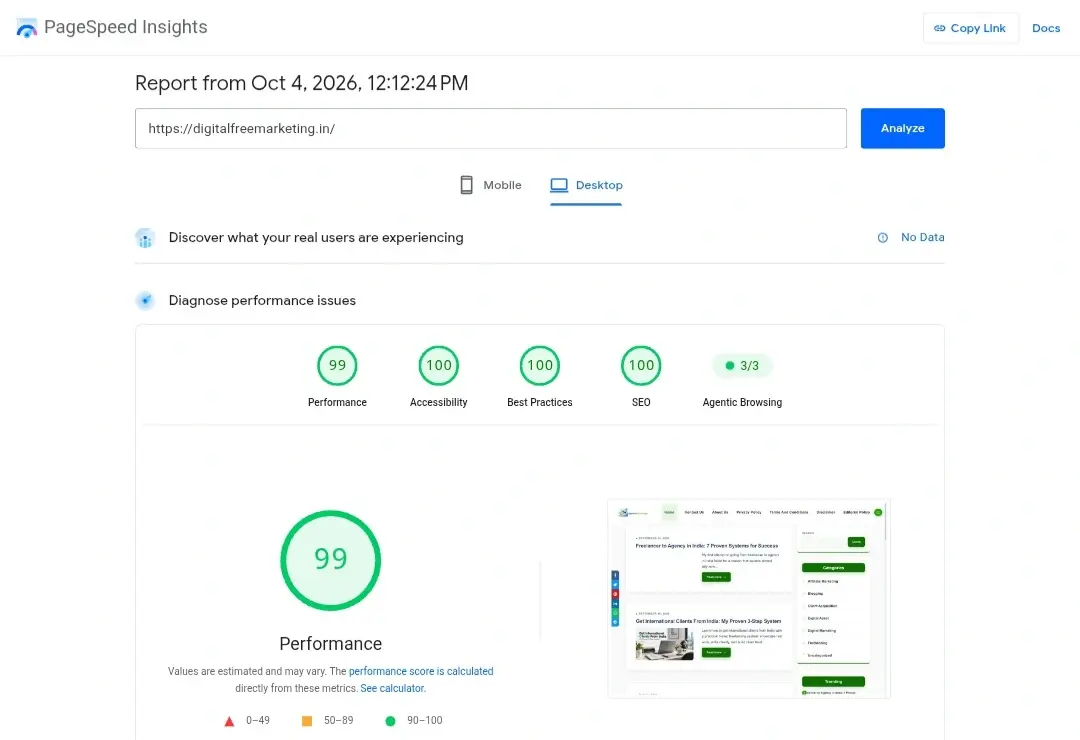
I know a screenshot is easy to fake, so don’t just take my word for it. The links under each image open the full reports on Google’s own site. Google only keeps shared reports for 30 days, though, so if those links have stopped working, run the same free test on the site yourself. Scores move a point or two between runs and change as a site adds new things, so a fresh test may not match these screenshots exactly.
Four rules for picking the first of your productized services:
- Start with the job you’ve done most. Your past projects show which service has the most predictable scope.
- Write down what’s excluded. A clear “doesn’t include” line protects your margin better than a long list of extras.
- Price the package, not your hours. Work out the cost if someone else delivered it, then price it so a margin survives.
- Keep custom work as the exception. Quote anything off the menu separately, at a higher rate.
Productized services also make the next system far easier, because it’s hard to put a vague service on a monthly plan.
System 2: Retainer Pricing for Freelancers
One-off projects give you a great month followed by a panic month. That swing is survivable when it’s just you. When a contractor is waiting to be paid, it becomes a real problem.
Retainer pricing for freelancers means a client pays a fixed amount every month for a defined piece of ongoing work, such as monthly SEO or website maintenance. Revenue you hope for turns into revenue you can plan around, which is exactly what you need before other people depend on you for their pay.
Set it up so it protects both sides:
- Put the deliverable in writing. “Four blog posts and a monthly report” is a retainer. “Available whenever you need me” is a trap.
- Bill at the start of the month. You’re selling a month of work, so don’t hand it over on credit.
- Add a 30-day notice period. If a client leaves, you get a month to replace the income instead of a nasty surprise.
Pro tip
Don’t pitch your first retainer to a stranger. Offer it to a client who already trusts you, for the work you’ve been doing for them anyway, at a small discount on your per-project rate. It’s the easiest yes you’ll get, and one signed retainer will teach you more about retainer pricing for freelancers than any template.
System 3: A Client Onboarding Process for Agencies
Onboarding covers everything between “yes” and the first piece of work. Solo, you can wing it. Once a second person touches the account, winging it means lost logins and a client explaining the same thing twice.
Picture a contractor who needs Search Console access on a Sunday evening, while the only password sits somewhere in a WhatsApp chat from March that nobody can find. A client onboarding process for agencies prevents exactly that. It needs no special software, only the same four steps in the same order every time.
Step 1: Get the scope signed and an advance paid. No work starts before both. The signed scope is what you’ll point to when “just one small extra” turns up.
Step 2: Ask for access through invites, not passwords. Google Search Console and Google Analytics both let the site owner add users by email, so ask for an invite instead of a login. When a contractor moves on, you remove one user and nobody resets anything.
Step 3: Hold one kickoff call and agree on one channel. Decide where questions go, whether that’s email or a single WhatsApp group, and who on your side answers them.
Step 4: Fix the date of the first report. Put it in the calendar during the kickoff. Clients relax once they know when they’ll hear from you next.

Write those four steps down once, and whoever you bring in next can onboard a client exactly the way you would. That’s your first SOP, written almost by accident.
Systems 4–5: How the Work Gets Done Without You
Ask most people how to go from freelancer to agency in India and they’ll tell you to hire someone. Hiring belongs in the middle of this list, though, because a new person without a process just becomes a second version of you, one who keeps calling to ask how you’d do it.
System 4: SOPs You Write While You Work
An SOP, or standard operating procedure, is a written checklist for a task you repeat. Agencies run on them, and you can’t scale your freelance business on instructions that only exist in your head. Freelancers still put them off, because writing one feels like a separate project, and a separate project is the last thing anyone wants after a long client day.
The trick is to write them during the work itself:
- Record your screen the next time you do the task for a client, and talk through what you’re doing and why.
- Turn the recording into a checklist in Google Docs or Notion, with short numbered steps and a screenshot wherever a setting is easy to miss.
- Hand it to someone and stay quiet. If they finish without calling you, the SOP works. A call halfway through means the document has a gap.
- Fix the step that tripped them up, then leave it alone until the next person finds another one.
Start with the task you repeat most often. The hardest one can wait. This is also where System 1 pays off again: productized services follow the same steps every time, so each one needs only a single SOP.
System 5: A Contractor Bench and a Written Agreement
Your first help usually shouldn’t be a full-time employee. A bench of contractors, meaning freelancers you’ve tested on real work and can call when a project lands, lets you scale your freelance business without a fixed salary to find every month.
Test each one on a small paid task before trusting them with a client project. One of your productized services makes the perfect test, because you already know exactly what good looks like. Then pay on time, every time. Good contractors have other options, and they remember who paid late.
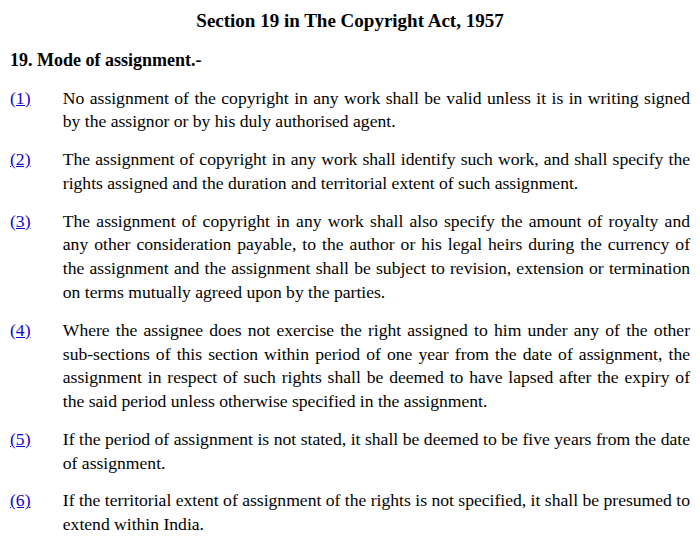
Most guides on going from freelancer to agency in India skip the question of ownership. Under Section 17 of the Copyright Act, 1957, the person who creates a work is generally its first owner. The exception that matters here covers employees under a contract of service, whose work belongs to the employer. A contractor isn’t your employee, so unless they’ve assigned it to you, the code or copy they write for your client can legally stay theirs.
Section 19 of the Act sets the rules for that assignment, and they’re stricter than most people expect. An assignment isn’t valid unless it’s in writing and signed by the person assigning it. If the document doesn’t state a duration, it’s deemed to last five years. Skip the territory, and it’s presumed to cover only India, which matters a lot once you have clients abroad.
So every contractor agreement should cover, at minimum:
- Scope and deadlines, or a simple way to attach them to each project.
- Payment terms, including whether you pay them even when your client pays you late.
- Confidentiality, so client data and access stay private.
- A written copyright assignment that names the work, the rights, the duration and the territory.
Sort this before the first project
Get the assignment signed before a contractor starts, not on the day a client asks who owns the files. Pay a lawyer once for a template you can reuse, and ask about non-solicit clauses while you’re there. Indian courts don’t enforce every restriction a contract tries to impose.
Paying contractors brings tax into the picture, too.
Systems 6–7: Paperwork and the Numbers That Say You’re Ready
Going from freelancer to agency in India changes your paperwork more than your job title. You won’t need all of it on day one, but you do need to know which parts switch on, and when.

System 6: Your Business Structure, GST and TDS
You don’t need a company to take on a contractor, and plenty of small agencies run as proprietorships for years. Here’s how the options compare:
| Structure | Who owns it | Best for | Watch for |
|---|---|---|---|
| Sole proprietorship | You, personally | Testing agency work with a contractor or two | No legal separation between you and the business |
| One Person Company (OPC) | You, through a company | Limited liability without a partner | More annual filings than a proprietorship |
| LLP | Two or more partners | Co-founders sharing the business | Needs at least two designated partners and yearly MCA filings |
| Private limited company | Shareholders | Raising investment or adding shareholders later | The heaviest compliance load of the four |
Talk to a CA before you register anything. The right choice depends on your income and on whether you’ll ever bring in a partner or an investor. Whatever you pick, open a separate bank account for the business from day one, because mixed money hides your real margin.
On GST, service providers generally have to register once aggregate turnover crosses ₹20 lakh in a financial year, or ₹10 lakh in some special category states. Two details catch people out:
- Export turnover counts. Work for foreign clients adds to that ₹20 lakh, even though it’s zero-rated.
- Clients in other states don’t force early registration. Notification 10/2017-Integrated Tax exempts service providers below the threshold from registering just because the supply is interstate.
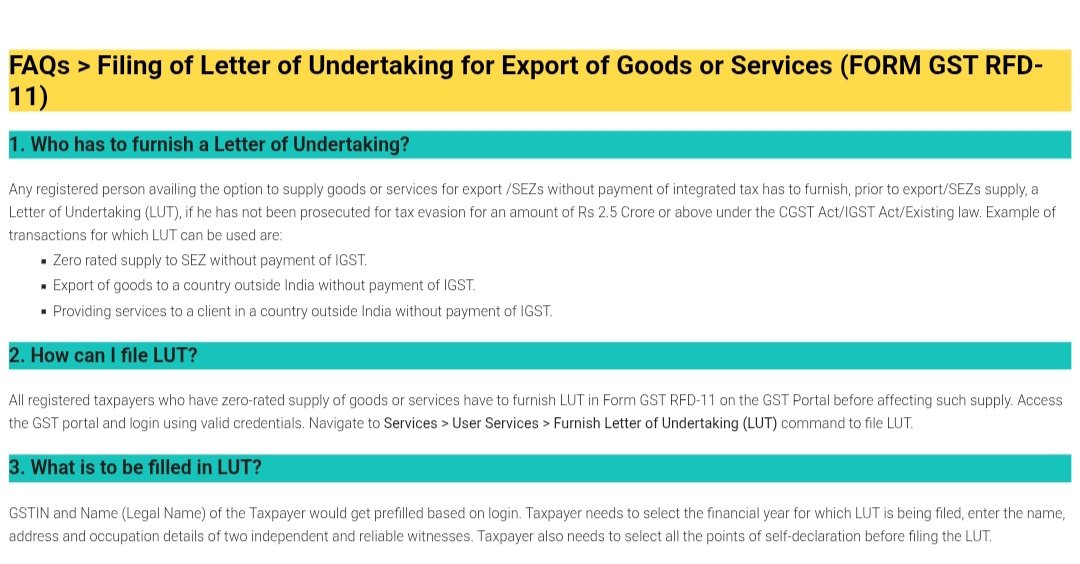
If you’re registered and billing clients outside India, file a Letter of Undertaking (Form GST RFD-11). It lets you invoice exports without paying IGST upfront and chasing a refund, and it has to be renewed every financial year. The GST portal’s own step-by-step LUT guide walks through the form, and our guide on getting international clients from India covers the rest of the export side.
TDS comes in once you’re paying people. Since 1 April 2026, what used to be Sections 194C and 194J sits under Section 393 of the new Income-tax Act, 2025. Going by TDSMAN’s summaries for contractors and professional fees:
- Contract work attracts TDS at 1% for individual or HUF contractors and 2% for others, once a single payment crosses ₹30,000 or the year’s total crosses ₹1,00,000.
- Professional and technical fees have a ₹50,000 annual threshold, with TDS at 10% on professional services and 2% on technical services.
Proprietors get one break: an individual or HUF generally has to deduct only if they were liable for a tax audit in the previous financial year. Whether a freelancer’s invoice counts as contract work or professional fees isn’t always obvious for digital work, so let your CA decide. Collect each contractor’s PAN before the first payment, too, since deductions without one run at a higher rate.
A caveat worth reading
Treat this section as a list of questions for your CA, not as tax advice. Thresholds and section numbers change, and in 2026 they just did. An hour with a CA before your first contractor payment costs far less than fixing a missed deduction later.
System 7: A Numbers Sheet You Check Every Month
Every step from freelancer to agency in India comes back to one question, and it’s the one I got wrong the first time: can the business actually afford this yet? This sheet answers it.
You don’t need accounting software for it. One spreadsheet, one row per client, updated on the first of every month:
- Revenue. What the client paid this month.
- Delivery cost. Contractor payments and tools for that account.
- Margin. In rupees and as a percentage.
- Your hours. The time you personally spent on it.
Your productized services should show the healthiest margins on the sheet. If they don’t, the package is priced wrong, and it’s far better to learn that from a spreadsheet than from your bank balance.
Then keep two numbers at the top. The first is how many months of fixed costs your bank balance could cover if new work stopped tomorrow, where fixed costs are the bills that arrive whether or not clients do, like software subscriptions and salaries.
Number two is how much of your team’s available time is already sold. Idle contractors mean the problem is sales, and hiring won’t fix it. When everyone’s full and you’re still turning work away, that’s your signal.
Before you commit to anything with a monthly cost, like a hire or a brand launch, check it against those two numbers. If the margin can’t carry it for a few months without a new client, it waits. A sheet like this would have told me, in plain numbers, that my brand could wait too.
Disclosure: the tools named in this article are examples only. None of them paid for a mention, and there are no affiliate links here.
Frequently Asked Questions
Do I need to register a company to start an agency in India?
No. Many small agencies start as sole proprietorships. An LLP or private limited company usually makes sense later, once you bring in partners or investors.
How many clients do I need before going from freelancer to agency in India?
There’s no fixed number. Look for more repeat work than you can handle alone, and a margin that can pay someone else with profit left over.
Can you scale your freelance business without full-time hires?
Yes. Productized services, delivered by tested contractors from written SOPs, let you take on more work. Full-time hires can wait until income is predictable.
How is retainer pricing for freelancers different from project pricing?
Project pricing pays once per job. A retainer pays a fixed monthly fee for defined ongoing work, so income is predictable enough to pay a team.
Should I trademark my agency’s name?
Yes, once you’ve settled on a name you’ll keep. Search IP India’s trademark records first. Marketing usually falls in Class 35, and web development in Class 42.
Where to Start
Going from freelancer to agency in India doesn’t start with a registration or a logo. Productize the service you sell most, and offer it to one loyal client as a retainer. Then open the numbers sheet on the first of next month.
Build the brand once those numbers can pay for it. I learned that one the expensive way.